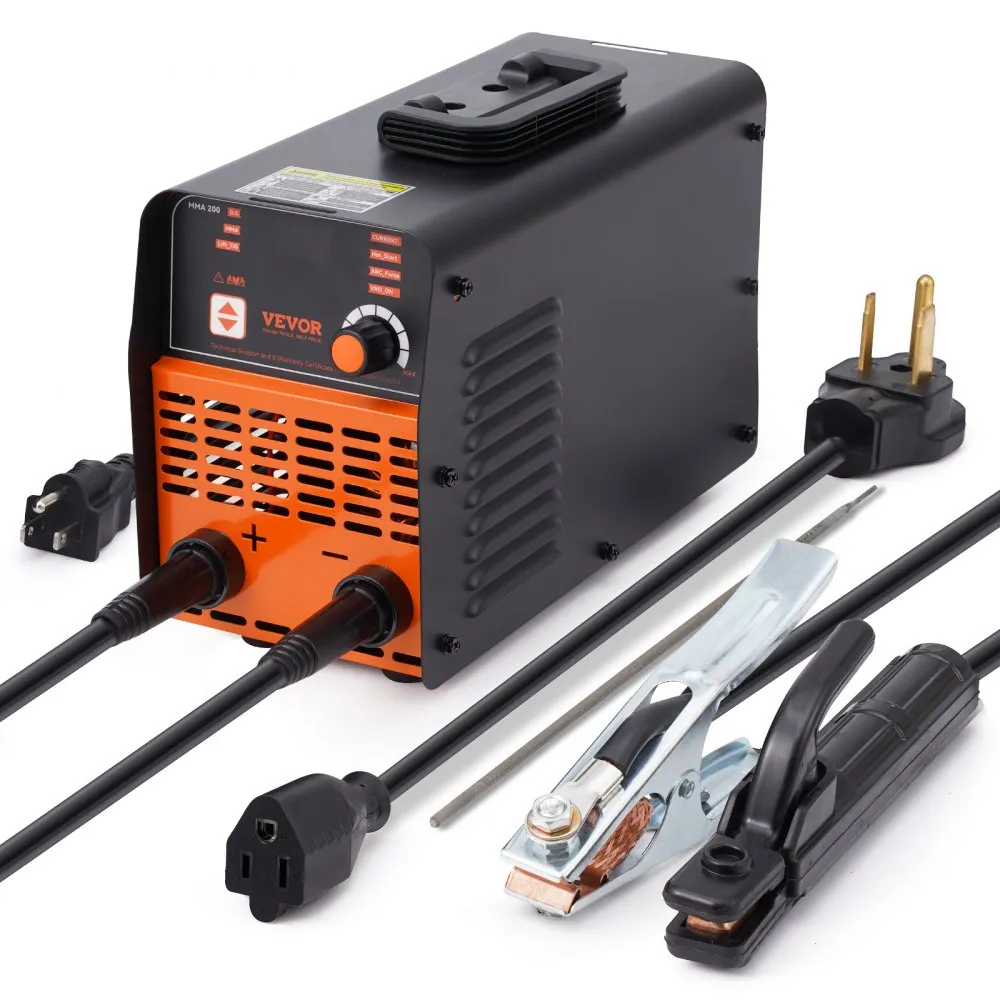
MMA welding — also known as Shielded Metal Arc Welding (SMAW), stick welding or Manual Metal Arc (MMA), classified as process 111 per AWS D1.1 and ISO 4063 — is one of the most widely used arc welding processes in the world. Rugged, versatile and affordable, it produces strong and durable welds on mild steel, stainless steel and cast iron, with no shielding gas cylinder and no wire feeder. Whether you’re on a jobsite, in a workshop or working outdoors in the wind, a good MMA welder handles it all. It’s typically the first welding process beginners learn, and it remains a go-to for maintenance professionals, structural fabricators and field welders worldwide.
SOUDURE TIG · MIG/MAG
MMA · PAR POINT · DÉBOSSELAGE
Liens fiables et vérifiés — disponibles sur Amazon & AliExpress
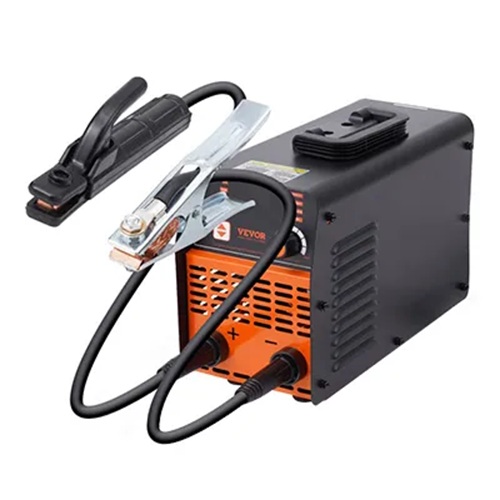
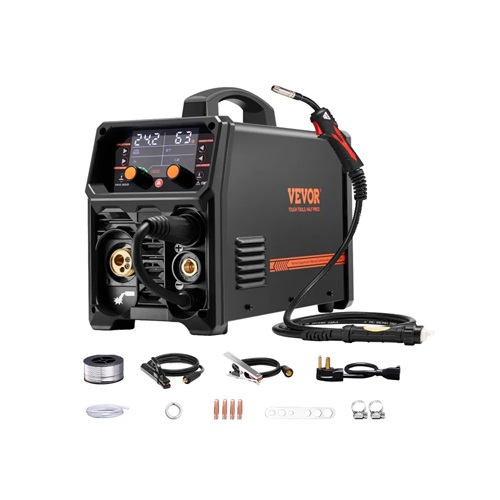
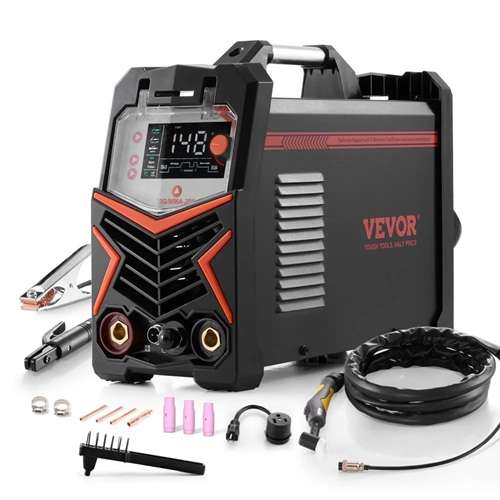
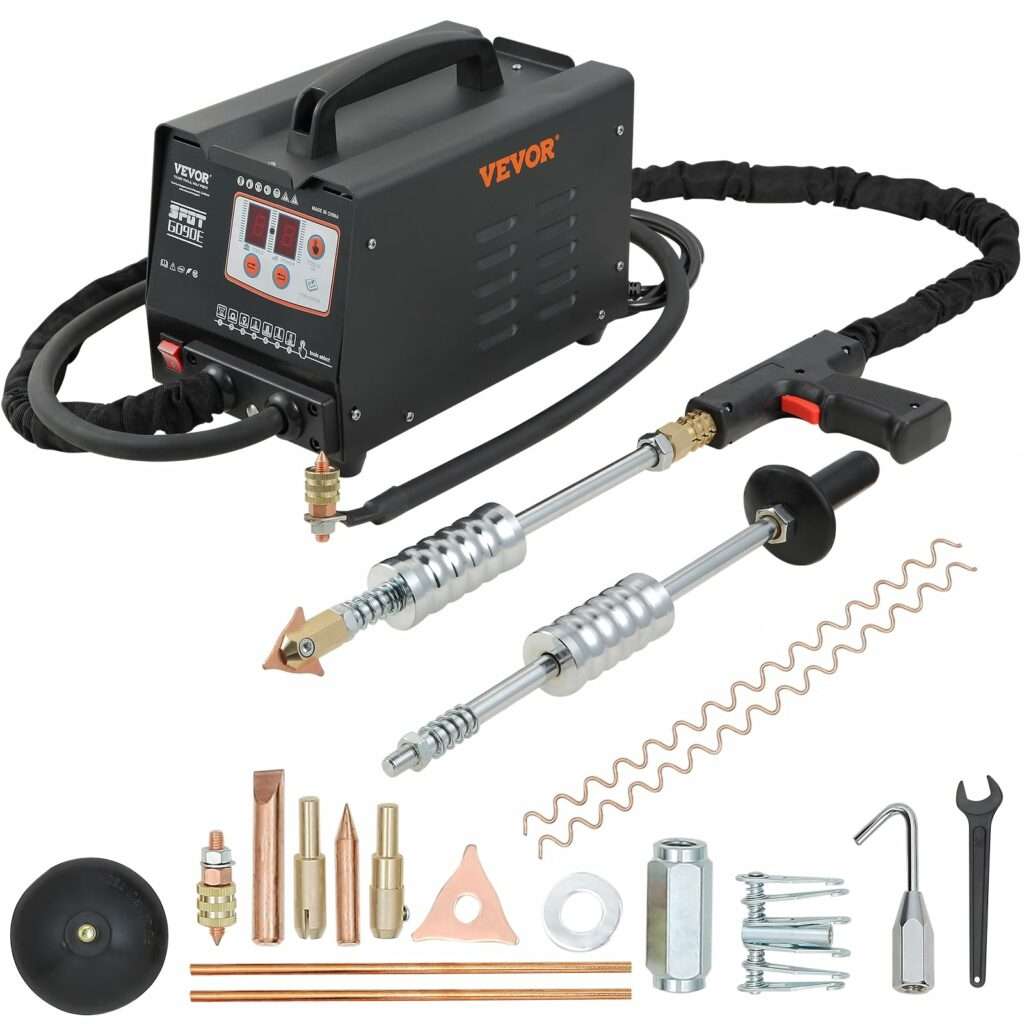
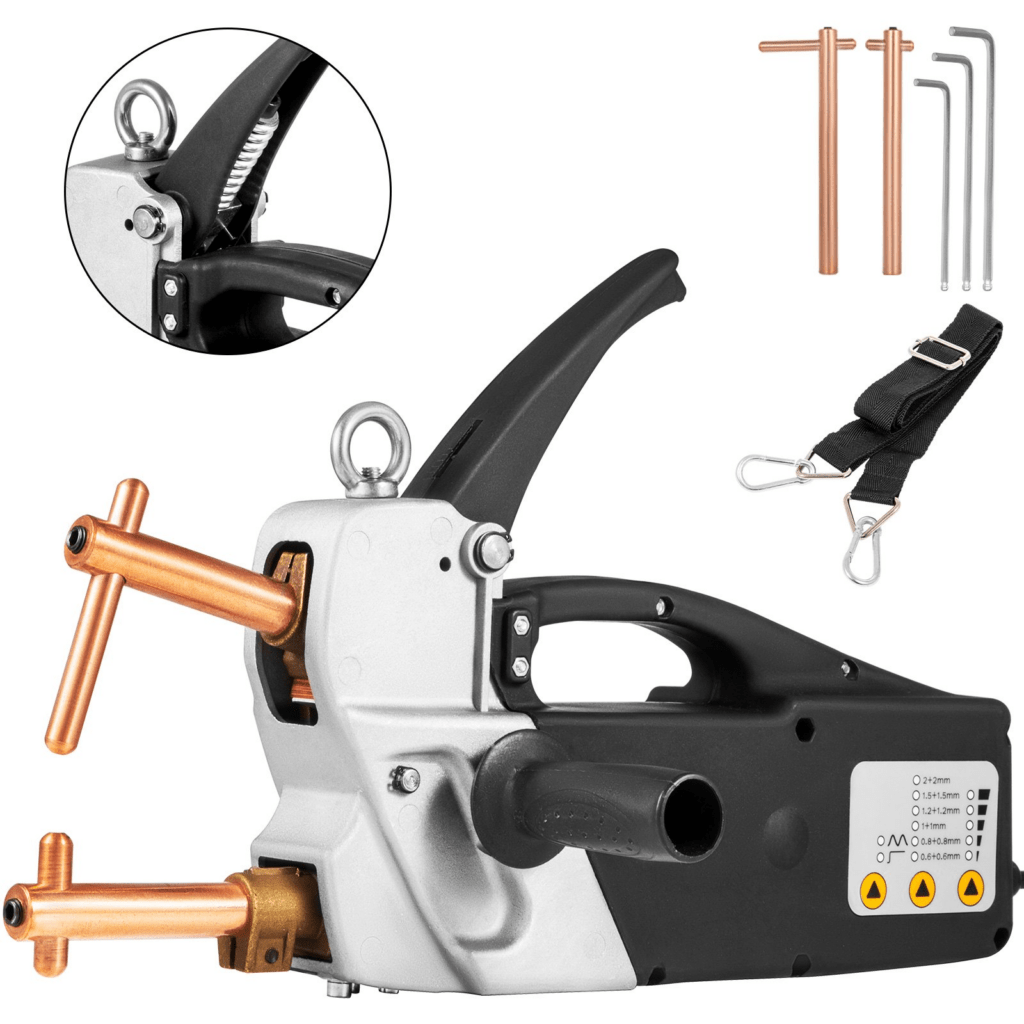
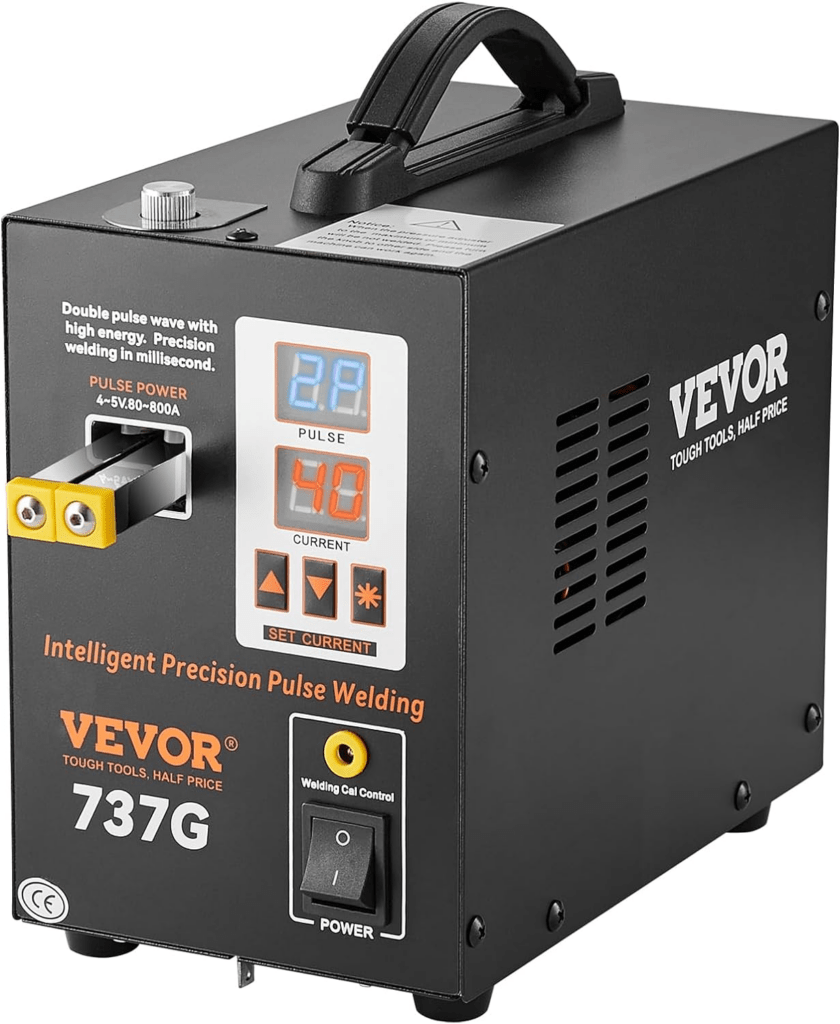
This complete guide to MMA (stick) welding covers everything you need to weld with confidence: the difference between MMA, MIG and TIG, how to choose the right stick electrode (rutile, basic, cellulosic, stainless, cast iron), amperage setting charts by electrode diameter and material thickness, polarity explained, Hot Start / Arc Force / Anti-Stick functions, welding positions and the most common defects. Also check our guides on TIG welding and MIG welding to choose the right process for your application.
1. What is MMA welding? (SMAW process explained)
MMA welding (Manual Metal Arc) is an arc welding process in which the arc burns between a consumable coated stick electrode and the workpiece. The arc temperature — between 6,000 °F and 10,000 °F (3,500–5,500 °C) — simultaneously melts the electrode core (filler metal) and the base metal. The electrode coating serves three functions as it burns: it generates a shielding gas that protects the weld pool from atmospheric contamination, deposits a slag layer over the cooling weld bead, and stabilises the arc. No shielding gas cylinder is required — making MMA welding the process of choice for outdoor work, site welding and harsh environments.
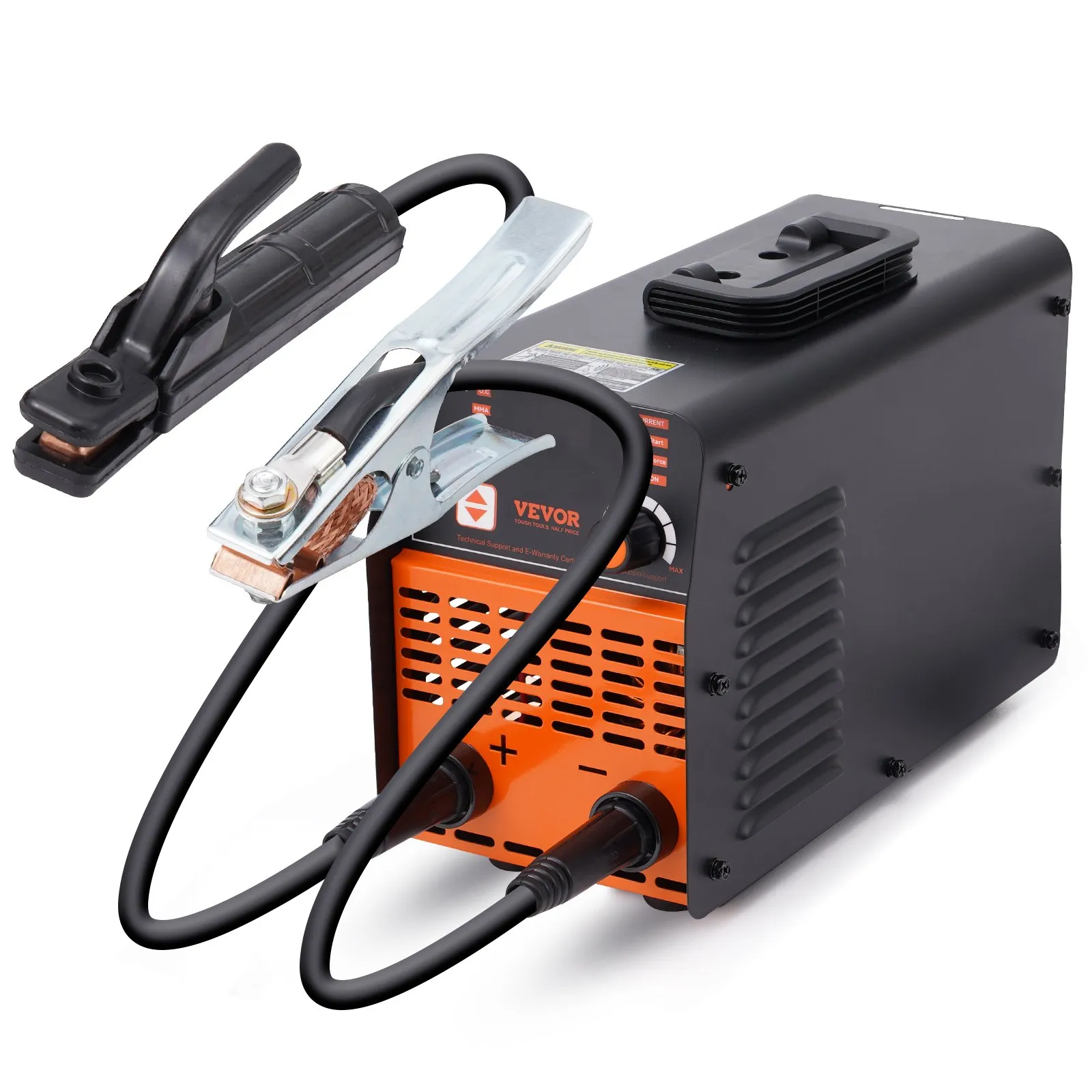
Also known as stick welding or arc welding in everyday workshop language, and classified as process 111 (ISO 4063), SMAW is the reference process wherever mobility, simplicity and reliability matter more than production speed — structural steel, maintenance, repair, agriculture, pipeline and offshore.
MMA vs MIG vs TIG welding: key differences
| Feature | MMA / Stick (111) | MIG/MAG (135) | TIG (141) |
|---|---|---|---|
| Filler metal | Coated stick electrode | Continuous wire | Manual filler rod |
| Shielding gas | None (coating) | Gas cylinder required | Gas cylinder required |
| Outdoor use | ✅ Ideal (wind-resistant) | ❌ Difficult (gas blown away) | ❌ Difficult (gas blown away) |
| Weld quality | Good to very good | Very good | Excellent |
| Ease of learning | Moderate | Easy | Difficult |
| Slag removal | Yes (chipping required) | No | No |
MMA welding glossary
Key terms for understanding MMA stick welding: the arc is the electrical discharge between electrode and workpiece that generates welding heat. The weld pool is the molten metal zone where electrode and base metal fuse. The slag is the solidified protective crust from the burned coating — chip it away with a slag hammer before the next pass. Amperage (A) is the primary setting on an MMA welder. Arc length should equal the electrode diameter — too long means spatter and poor shielding. Electrode sticking is the most common beginner issue, caused by too low amperage or hesitant arc starting. The crater at the end of a weld bead must be filled before breaking the arc to prevent cracking.
2. Advantages and limitations of MMA stick welding
MMA stick welding delivers total autonomy: no gas cylinder, no wire feeder, no wind sensitivity — the welder is ready to go anywhere there’s power. That makes it the first choice for field repairs, site welding, emergency maintenance and any job where portability matters. The trade-offs: lower deposition rate than MIG (roughly 1–2.5 lb/hr vs 3–8 lb/hr), slag chipping between passes, and arc length control that takes practice to master. For material thinner than 1/16 in (1.5 mm), MIG welding or TIG welding are better suited.
3. How an MMA stick welder works
An MMA stick welder produces a constant welding current that keeps the arc stable despite the natural variation in arc length caused by hand movement. Modern machines are almost exclusively compact inverter power sources — lightweight and efficient — converting mains power (120 V or 240 V) into DC or AC welding current. The welding circuit consists of the power source, the electrode holder cable and the work lead with its ground clamp, clamped directly to the workpiece or welding table.
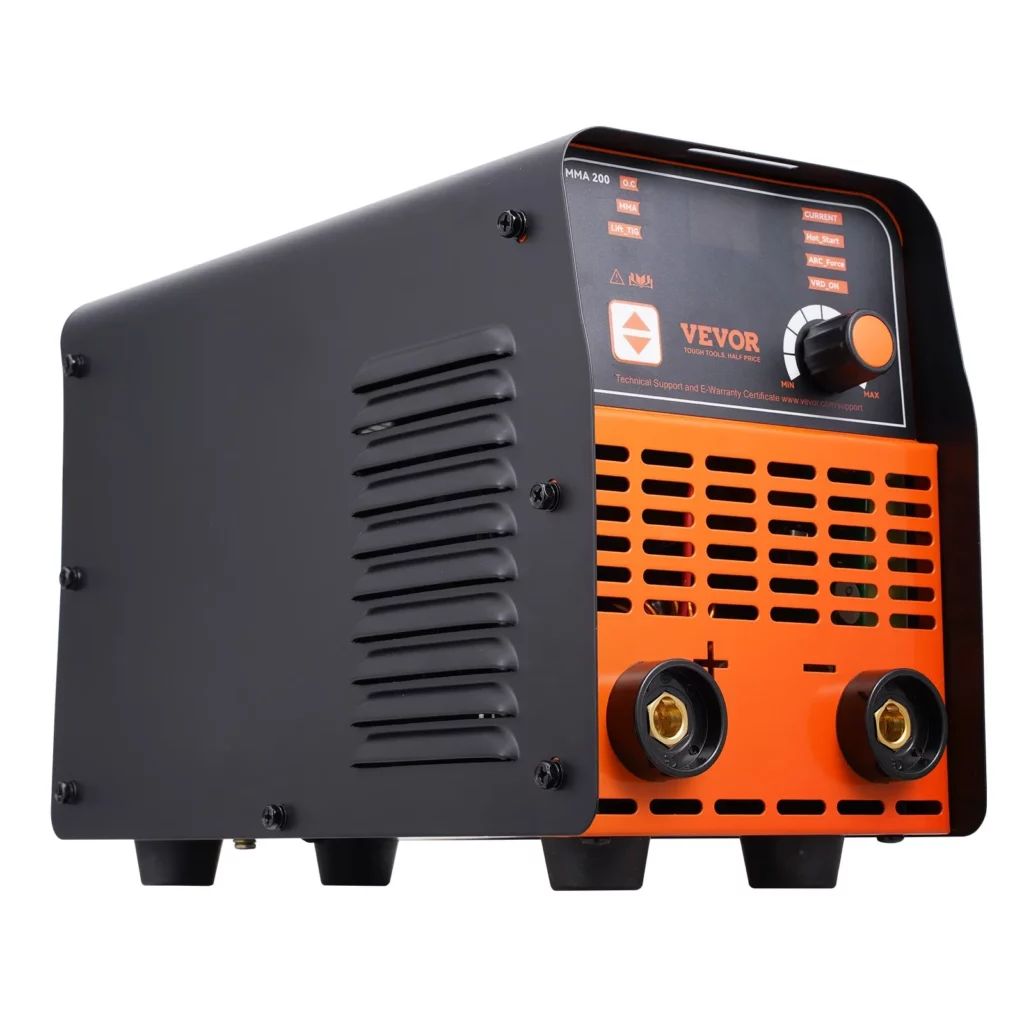
Hot Start, Arc Force and Anti-Stick: the electronic assist functions
Modern MMA inverters include three electronic features that make welding significantly easier. Hot Start automatically boosts amperage for 0.5–2 seconds at arc strike — it prevents the cold electrode from sticking at the start of a weld, especially useful with low-hydrogen (basic) electrodes. Arc Force (also called Arc Control) briefly increases amperage when arc length drops too short (short-circuit risk) — the arc stays stable even when the hand isn’t perfectly steady. Anti-Stick automatically cuts power if the electrode sticks for more than 1–2 seconds — the electrode releases without overheating the machine. All three are adjustable on VEVOR MMA welders.
4. Stick electrodes: selection chart by type and material
Choosing the right stick electrode is just as important as setting the correct amperage. Electrode selection depends on the base metal, welding position and required mechanical properties. US reference classifications follow AWS A5.1 (carbon steel) and AWS A5.4 (stainless steel). The letter E designates a stick electrode; the first two digits indicate minimum tensile strength (× 1,000 psi); the third digit indicates welding position; the fourth digit specifies coating type and current.
| Electrode type | AWS class. | Material | Polarity | Strengths | Typical use |
|---|---|---|---|---|---|
| Rutile (R) | E6013 | Mild steel | DC+ or AC | Easy arc start, clean bead, slag lifts off easily | General fabrication, beginners, all positions |
| Low-hydrogen (basic) | E7018 | Mild / low-alloy steel | DC+ | Excellent mechanical properties, low-temp toughness | Structural, pressure vessels, AWS D1.1 code work |
| Cellulosic | E6010 / E6011 | Mild steel / pipeline | DC+ (E6010) / AC | Deep penetration, vertical-down welding, minimal slag | Pipeline, cross-country, vertical-down |
| Stainless (special) | E308L / E316L | SS 304 / 316 | DC+ | Corrosion resistance, clean bead | Food-grade SS, piping, maintenance |
| Cast iron (special) | ENiFe-CI | Grey / ductile iron | DC+ | Machinable weld, good adhesion on cast iron | Cast iron repair |
Pro tip: low-hydrogen electrodes (E7018) must be stored dry and re-dried at 500–600 °F (260–315 °C) for 1–2 hours before use per AWS D1.1. A damp E7018 electrode causes porosity and severely degrades weld toughness — the most common cause of hydrogen-induced cracking in structural welds. E6013 rutile electrodes are much less moisture-sensitive and can be used without re-drying under normal conditions.
5. MMA welding settings: amperage chart by material and thickness
In MMA stick welding, amperage (A) is the primary setting — determined by electrode diameter and coating type. Too low → electrode sticks, unstable arc, lack of fusion. Too high → excessive spatter, flat bead, burn-through risk on thin material. Rule of thumb: 40–50 A per 1/32 in (1 mm) of electrode diameter (example: 1/8 in / 3.2 mm electrode → 100–140 A). Arc length should match the electrode diameter — no longer, no shorter.
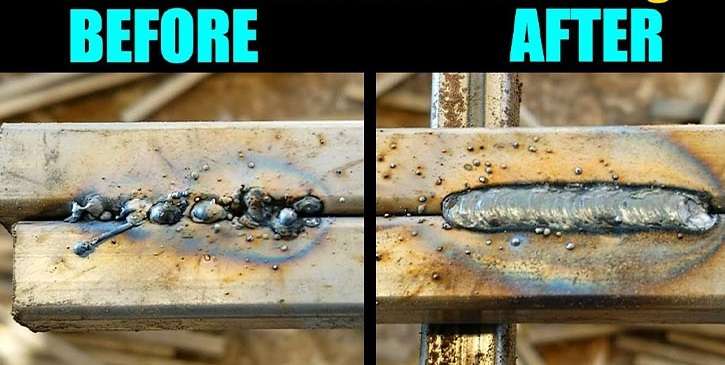
MMA amperage chart — mild steel (rutile and low-hydrogen electrodes)
| Electrode diameter | Amperage (A) | Material thickness | Recommended electrode | Polarity |
|---|---|---|---|---|
| 1/16 in (1.6 mm) | 25–40 A | 1/16–3/32 in (1.5–2 mm) | Rutile E6013 | DC+ or AC |
| 5/64 in (2.0 mm) | 40–65 A | 3/32–1/8 in (2–3 mm) | E6013 / E7018 | DC+ |
| 3/32 in (2.5 mm) | 70–100 A | 1/8–3/16 in (3–5 mm) | E6013 / E7018 | DC+ |
| 1/8 in (3.2 mm) | 100–140 A | 3/16–5/16 in (5–8 mm) | Low-hydrogen E7018 | DC+ |
| 5/32 in (4.0 mm) | 140–180 A | 5/16 in+ (8 mm+) | Low-hydrogen E7018 | DC+ |
| 3/16 in (5.0 mm) | 180–240 A | 1/2 in+ (12 mm+) | Low-hydrogen E7018 | DC+ |
MMA amperage chart — stainless steel (E308L / E316L electrodes)
| Electrode diameter | Amperage (A) | Thickness | Polarity | Note |
|---|---|---|---|---|
| 5/64 in (2.0 mm) | 35–55 A | 3/32–1/8 in (2–3 mm) | DC+ | −10–15% vs mild steel |
| 3/32 in (2.5 mm) | 55–75 A | 1/8–3/16 in (3–5 mm) | DC+ | Travel fast, avoid heat build-up |
| 1/8 in (3.2 mm) | 80–110 A | 3/16–5/16 in (5–8 mm) | DC+ | Allow to cool between passes |
Polarity in MMA welding: DCEP vs DCEN
Polarity determines heat distribution in the welding circuit. DCEP (DC Electrode Positive) — the most common setup — concentrates roughly 2/3 of the heat at the electrode: good filler metal melting, moderate base metal penetration. Recommended for rutile (E6013) and low-hydrogen (E7018) electrodes. DCEN (DC Electrode Negative) concentrates heat in the workpiece: deeper penetration, slower electrode melting — used for specific special electrodes (hardfacing, some cast-iron work). AC (alternating current) is used where arc blow is a problem or with older transformer-based machines. Always check the electrode manufacturer’s data sheet — the correct polarity is marked on the packaging.
6. Welding positions and technique in MMA stick welding
MMA stick welding can be performed in virtually every position. In the flat position (1G/PA), use the nominal amperage — easiest position, best for learning. In the horizontal/fillet position (2F/PB), reduce amperage by 5–10%. In the vertical-up position (3G/PF), reduce by 10–15% and use a weave or Z-motion to control the pool. In vertical-down (3G/PG), only with cellulosic electrodes — short arc, fast travel. In the overhead position (4G/PE), reduce by 15–20% — demanding position reserved for experienced welders.
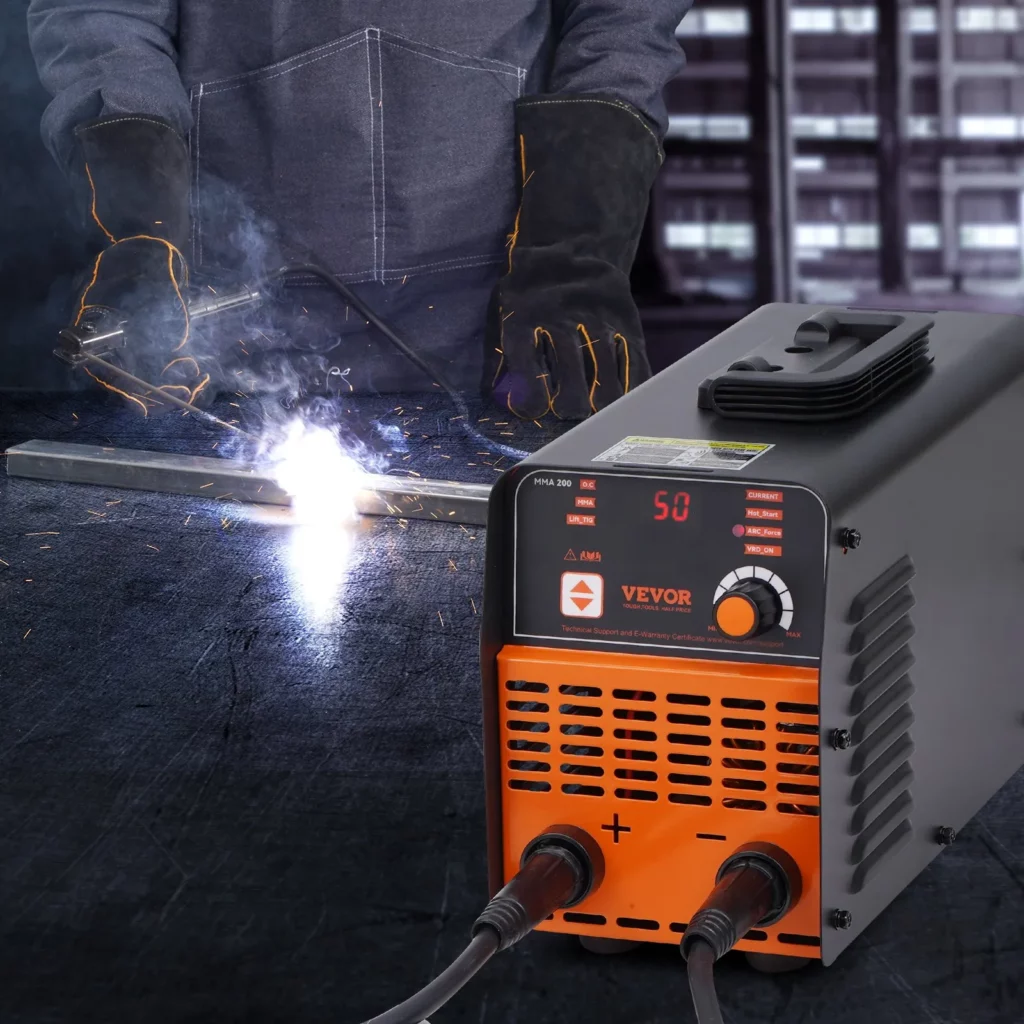
Drag technique: always pull, never push in MMA welding
Unlike MIG welding where you can push or pull, MMA stick welding is always performed with a drag (pull) technique — electrode tilted 10–20° in the direction of travel. This keeps the slag behind the weld pool (not ahead of it), maintains good visibility of the pool, and ensures the solidifying bead is fully protected by the slag blanket. Pushing the electrode in stick welding traps slag inclusions in the weld — avoid it.
Joint preparation for MMA welding
MMA is more tolerant of surface contamination than TIG or MIG, but basic prep still matters. Remove rust, mill scale and paint with a grinder or wire brush. Degrease if needed. For material over 3/8 in (10 mm) thick, bevel the joint (V-groove or U-groove) to allow multi-pass filling with proper inter-pass fusion. Tack-weld assemblies before running the full bead to control distortion.
7. Safety in MMA stick welding
MMA stick welding generates extreme heat, molten metal spatter, metal oxide fumes and intense UV/IR radiation. Full PPE is mandatory per OSHA 29 CFR 1910.252 and AWS Z49.1: auto-darkening welding helmet (shade 9–12 depending on amperage), leather welding gloves, flame-resistant clothing (NFPA 701 or equivalent), safety boots and respiratory protection when ventilation is insufficient. Welding coated, galvanised or high-alloy materials in confined spaces requires forced ventilation or supplied-air respirator.
8. MMA stick welding FAQ
What is the difference between MMA welding and MIG welding?
MMA stick welding uses a coated consumable electrode with no shielding gas — ideal outdoors and on site. MIG welding uses a continuous wire under shielding gas — faster and more productive for long workshop runs. Stick for portability and repair, MIG for productivity. See our MIG welding guide for a full comparison.
What electrode should I use for MMA welding mild steel?
For general mild steel work: rutile E6013 — easy arc start, clean bead, great for beginners. For structural and code-quality welds: low-hydrogen E7018 — best mechanical properties and low-temperature toughness. For stainless 304/316: E308L or E316L. For cast iron repair: ENiFe-CI (nickel-iron electrode).
Why does my MMA electrode keep sticking?
Electrode sticking is caused by: amperage set too low (increase by 5–10 A), hesitant arc strike, damp electrode (re-dry E7018 at 500–600 °F / 260–315 °C for 1–2 hours), or arc length too short. The Anti-Stick function cuts power automatically — twist the electrode slightly to free it. If the problem persists, check that the ground clamp is making solid contact with the workpiece.
Can I weld outdoors with an MMA stick welder?
Yes — that’s one of the biggest advantages of stick welding. The electrode coating generates its own shielding gas, making the process completely wind-resistant — unlike MIG and TIG where the gas is blown away. MMA is the reference process for site work, field repair, elevated positions and any outdoor application.
What does Hot Start do on an MMA welder?
Hot Start automatically boosts amperage for 0.5–2 seconds at arc strike to prevent the cold electrode from sticking at the start of a weld. It’s especially useful with low-hydrogen E7018 electrodes, which are harder to start than rutile E6013. Hot Start level is adjustable on modern MMA inverters.
What amperage for a 1/8 in (3.2 mm) MMA electrode?
For a 1/8 in (3.2 mm) electrode: 100–140 A depending on position. Flat: 130–140 A. Vertical or overhead: 90–110 A. For stainless, reduce by another 10–15% to limit heat input and distortion. Always check the amperage range printed on the electrode packaging.
Is MMA stick welding good for beginners?
MMA requires more skill than MIG — the main challenge is maintaining a consistent arc length as the electrode gradually burns down. Modern inverters with Hot Start, Arc Force and Anti-Stick make it much more forgiving. Start with E6013 rutile electrodes, 3/32 in (2.5 mm) diameter, on mild steel flat position — that’s the easiest setup to learn on.
What MMA welder should I buy for home or professional use?
For versatile home-to-professional use, a 160–200 A MMA inverter on 240 V is the standard recommendation — it handles electrodes up to 5/32 in (4.0 mm) on material up to 5/16 in (8 mm). Look for Hot Start, Arc Force and Anti-Stick, a 60% duty cycle minimum and compatibility with both rutile and low-hydrogen electrodes. VEVOR MMA welders offer excellent value for regular workshop use.
Why does my MMA weld have porosity (holes)?
Porosity in stick welds is caused by: damp electrodes (re-dry E7018 per AWS D1.1), contamination on the base metal (degrease and wire-brush), arc length too long (insufficient shielding), or travel speed too fast. E7018 low-hydrogen electrodes are particularly moisture-sensitive — even brief exposure to humid air is enough to cause porosity and hydrogen cracking in structural welds.
Are VEVOR MMA welders suitable for professional use?
VEVOR MMA inverters feature adjustable Hot Start, Arc Force and Anti-Stick, are compatible with both rutile and low-hydrogen electrodes, and are available in 120 V and 240 V versions depending on the model. Excellent value for regular workshop, fabrication and maintenance use. For continuous heavy industrial production, premium brands remain the benchmark — but for the vast majority of professional day-to-day applications, VEVOR machines deliver very satisfactory results.
Conclusion: why MMA stick welding remains essential
MMA stick welding (SMAW, process 111) remains essential because no other process combines its three core strengths: total portability (no gas, no wire feeder), material versatility (mild steel, stainless, cast iron) and performance in tough conditions (wind, site, out-of-position). With the right amperage, the right stick electrode (E6013, E7018, E308L…), a controlled arc length and properly calibrated electronic assists, you’ll lay down strong, clean, consistent welds in any configuration. Explore our selection of VEVOR MMA, TIG and MIG welders and find the right machine for your shop.